Open daily through the Devon summer holidays. Under 3s go free, every day.
A proper Devon day out, from first ride to last chip
Fifty two rides, a working farmyard and a heated play barn across 40 acres above the Clyst valley. Under 3s go free. Parking is free. The rain plan is built in.
Open weekends and every school holiday, plus daily through August.
Book online 24 hours ahead and pay £18.50 instead of £24 at the gate.
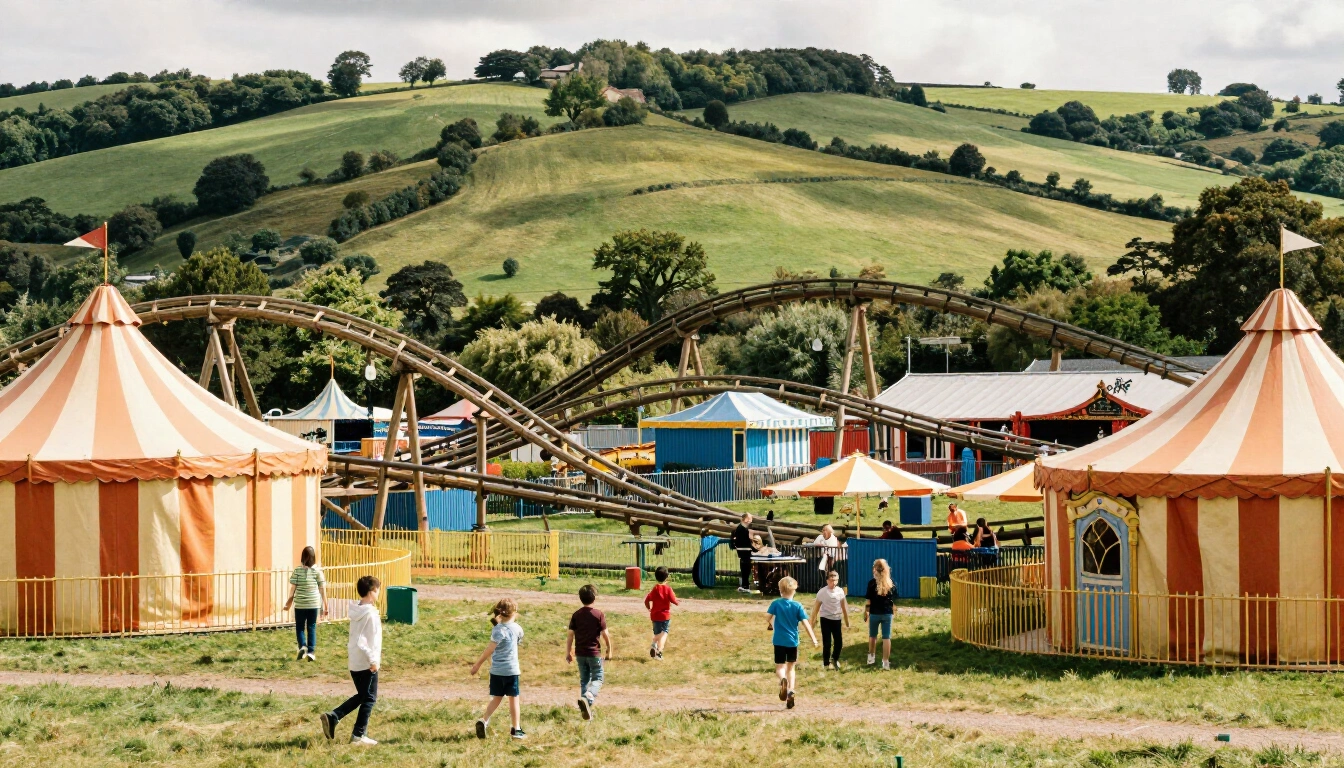
Four things families ask before they book
Free parking, no fees
Nine hundred spaces on hardstanding, none of it charged, and no booking fee added at checkout. The price you see online is the price you pay.
A real wet weather plan
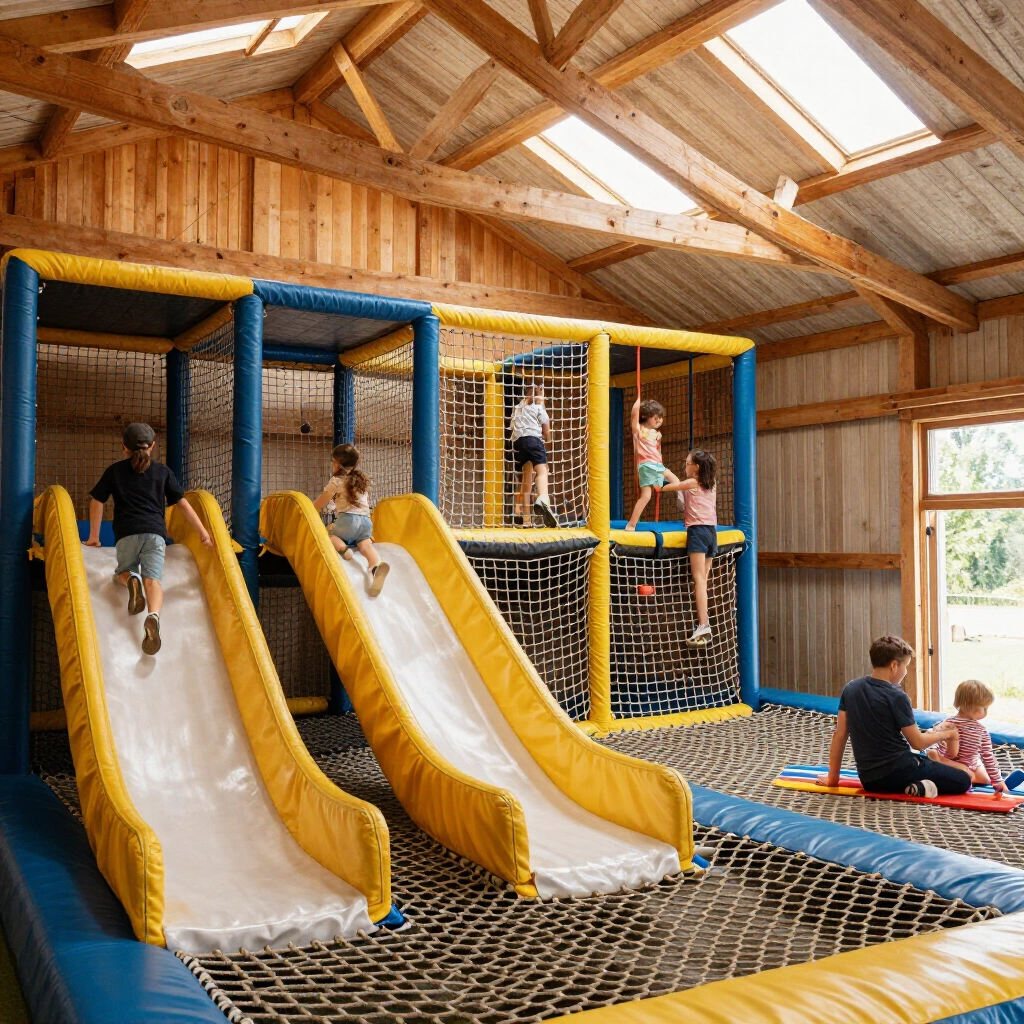
The play barn, animal barn and soft play run to 2,400 square metres of covered space. Devon rain does not end the day, it just moves it indoors.
Under 3s go free
Every day of the season, no voucher needed. Buggies park at every ride entrance and the changing rooms sit beside the farmyard cafe.
Heights published upfront
Every ride lists its minimum height on this page before you arrive. Measure at home and you avoid the queue that ends in tears.
Three things worth reading before you drive over

Rides for every nerve level
Fifty two of them, sorted into four thrill bands from the toddler tractors up to the Valley Drop. Every height limit is listed, so you can plan the order before the gates open.
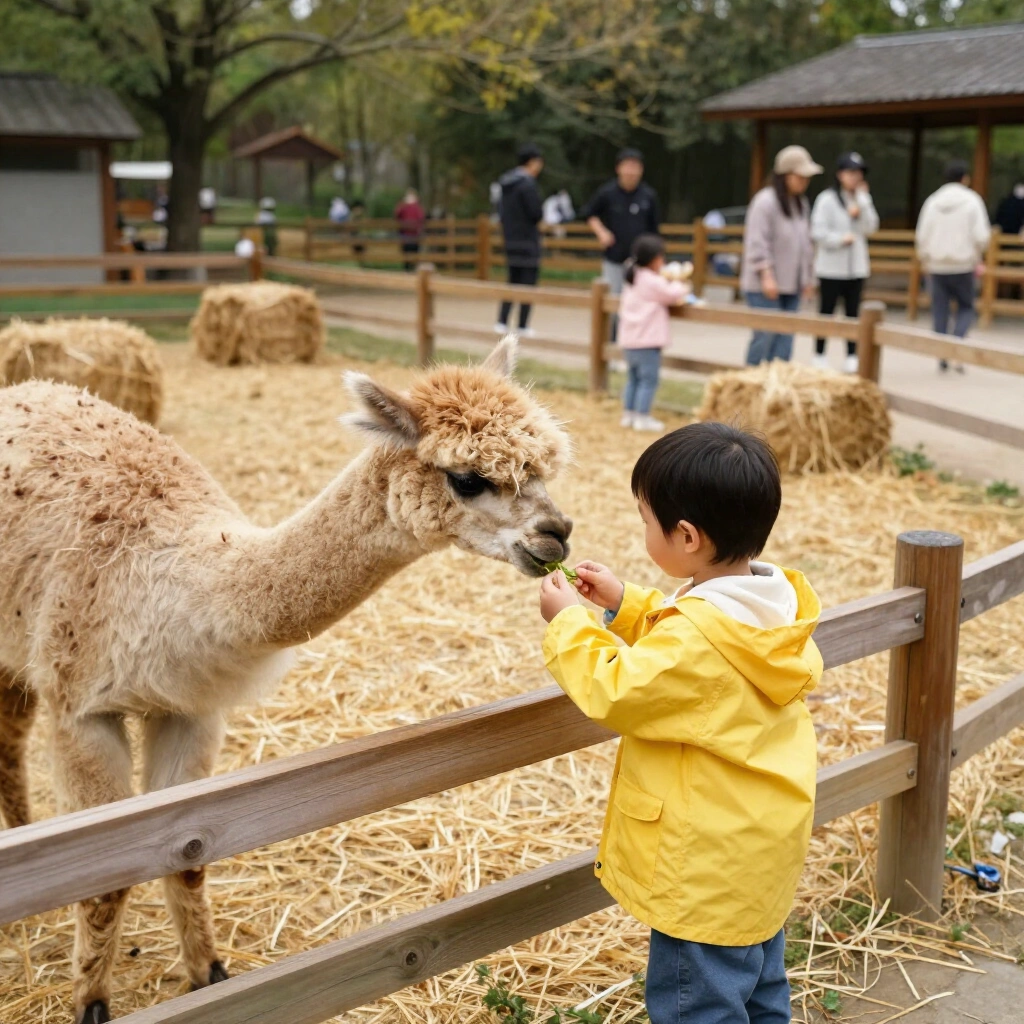
Four seasons, four different parks
The same 40 acres works differently in April, August, October and December. Lambing, water play, the pumpkin trail and the lantern nights each need a different visiting strategy.
The pass that pays for itself
An annual pass costs the same as two and a half day tickets. If you live inside 45 minutes of Clyst St Mary, the maths usually favours the pass by the third visit.
How to plan a first visit to Clyst Valley Park
Most families lose ninety minutes before lunch on a first visit, and it is nearly always the same ninety minutes. They park at the far end, cross the site twice, then join the food queue at the exact moment everyone else does.
The park runs down a slope above the Clyst. The entrance, farmyard and play barn sit at the top. The bigger rides, water play and the lake walk sit at the bottom. Crossing between the two ends four or five times is the single biggest waste of a day here, and it is entirely avoidable.
Gates open at 10am on standard days and 9.30am through August. Arriving at 10.15am is worse than arriving at 11am, because 10.15am is when the approach road backs up towards the roundabout and the entry scanners slow to a crawl.
Aim for 9.45am or 11.15am. Avoid everything in between.
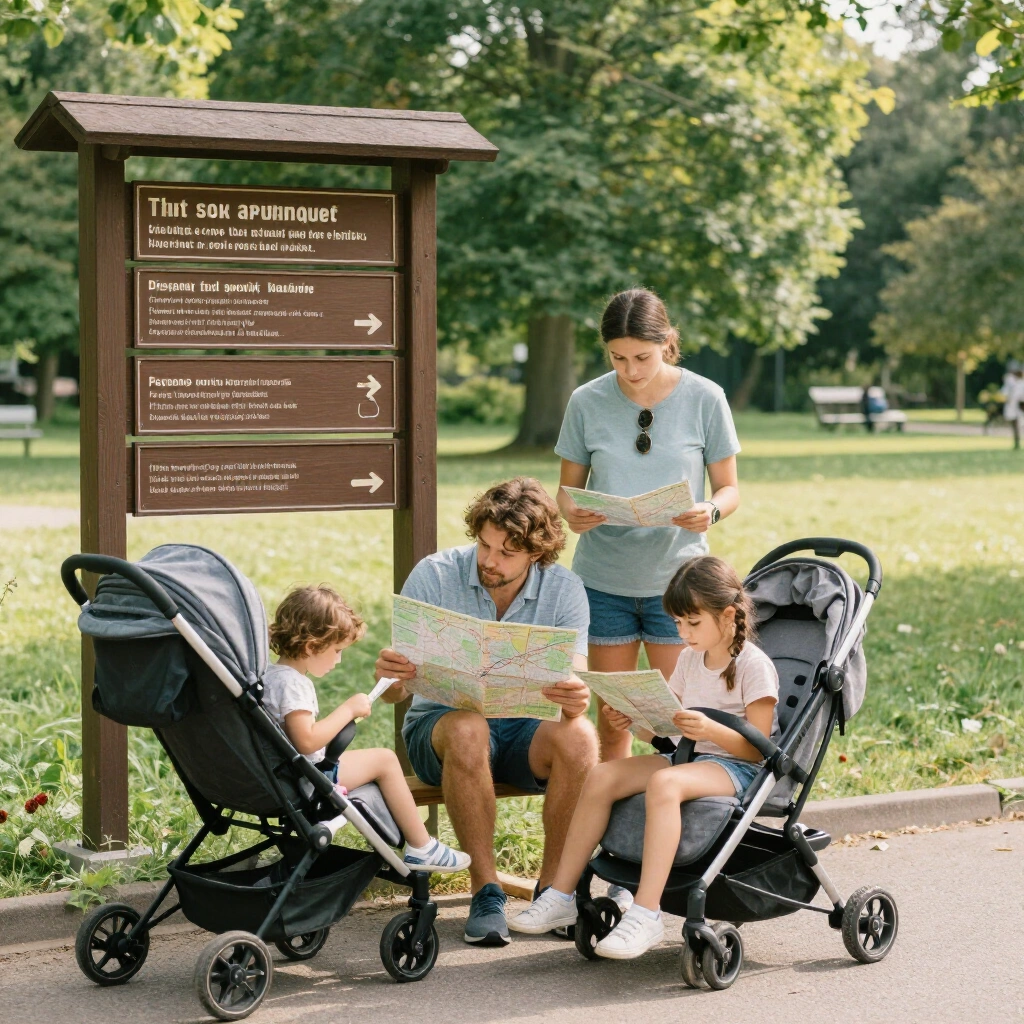
Paper maps sit in a box by the turnstiles. Take one even if you have the site open on a phone, because signal drops in the bottom field.
Getting here and where to park
Leave the M5 at Junction 30 and follow the A3052 towards Sidmouth. The park entrance sits about a mile and a half along on the left, signed twice from the roundabout. From Exeter city centre the drive takes twelve minutes outside rush hour and closer to twenty five between 8am and 9am on a weekday.
The Stagecoach 9A stops on the main road roughly every half hour, and the walk from the stop to the gate takes six minutes on a footpath. Parking rows A to D sit closest to the top gate. Rows H onward look tempting when the site is quiet, but they add a nine minute walk at the end of a day when someone is being carried.
Work the park as a loop, not a zigzag
Turn right at the entrance and walk the outer edge clockwise. That route takes you through the farmyard while the animals are still active, down past the smaller rides, into the bottom field for the drop tower and water play, then back up through the play barn as legs start to give out.
The clockwise loop also runs against the crowd. Around seven in ten visitors turn left, because the first thing they see is the carousel. Turning right buys you twenty quiet minutes on rides that will have a fifteen minute queue by noon.
Families with a child under four should reverse the order and start in the play barn. Toddlers do their best hour first thing, and the barn is empty until about 11am.
Eat at 11.40am or 1.45pm
Three food outlets serve the site: the farmyard cafe at the top, the barn kitchen in the middle, and a chip van by the bottom field that opens only in peak season. All three peak between 12.15pm and 1.30pm, when a hot lunch takes about twenty five minutes from queue to table.
Move either side of that window and the same lunch takes eight minutes. The farmyard cafe holds the shortest queue on wet days because most people head for the barn kitchen to dry off.
You can bring your own food. There are covered picnic benches beside the play barn and open tables by the lake, and nobody checks bags for sandwiches.
What to bring, and what to leave in the car
Bring wellies or trainers you do not mind ruining. The bottom field is grass on clay, and it holds water for two days after rain. Bring a full change of clothes per child if the water play is open, plus a towel.
Leave the pushchair rain cover on. Leave scooters in the boot, since they are not allowed past the turnstiles. Leave the big rucksack too, because lockers by the entrance cost £2 and save you carrying it round the loop.
Sun cream matters more than people expect. Roughly two thirds of the site sits in open field with no tree cover, and a bright Devon afternoon in July burns fair skin inside an hour.
Where the day usually goes wrong
Here is the honest caveat. On the busiest six or seven days of the year, mainly the middle Saturdays of August and the last weekend in October, the park sells more tickets than the site comfortably absorbs. Queues on the four headline rides run past thirty minutes, the car park spills onto the overflow field, and the barn kitchen runs out of the kids’ hot meal by about 2pm.
If your only free day falls on one of those dates, come anyway, but change the plan. Arrive at opening, ride the four big ones in the first hour, then spend the afternoon in the farmyard and the play barn where capacity is not the problem. Do not save the big rides for later on those days.
A first visit, hour by hour
9.45am arrive and park in row C or D, close to the top gate. 10am through the turnstiles, right turn, farmyard first. 10.40am small rides on the middle terrace. 11.40am early lunch at the farmyard cafe. 12.30pm bottom field for the drop tower and water play, which stays quiet while everyone else eats.
2.30pm play barn, shoes off, twenty minutes of sitting down for the adults. 3.30pm second pass at whichever ride the children liked most, since queues fall away in the last ninety minutes. 4.30pm ice cream at the top gate and out before the car park empties at five.
Check every height rule before you leave the house
Fourteen rides carry a posted minimum height. The other 38 attractions, including the farmyard, the play barn and the lake walk, have no height rule at all. Set the numbers below and the list updates as you type.
Height and Thrill Matcher
Measure at home in socks, type the number, and see exactly which of the 14 named rides are open to that child today. Nothing here is a promise about queue length, only about height rules.
Height rules are checked at the ride entrance with a measuring board. Staff round down, never up, so a child on the line will be turned away.
Two rules catch families out every season. The dodgems need 140cm to drive but only 100cm to ride as a passenger, so a small child can still go round with an older sibling. Little Tractors has a maximum height of 135cm, which means some eight year olds have already grown out of it.
Height bands change when a ride is refurbished. The numbers here were last checked against the ride entrance boards in March, and the park updates them at the start of each season.
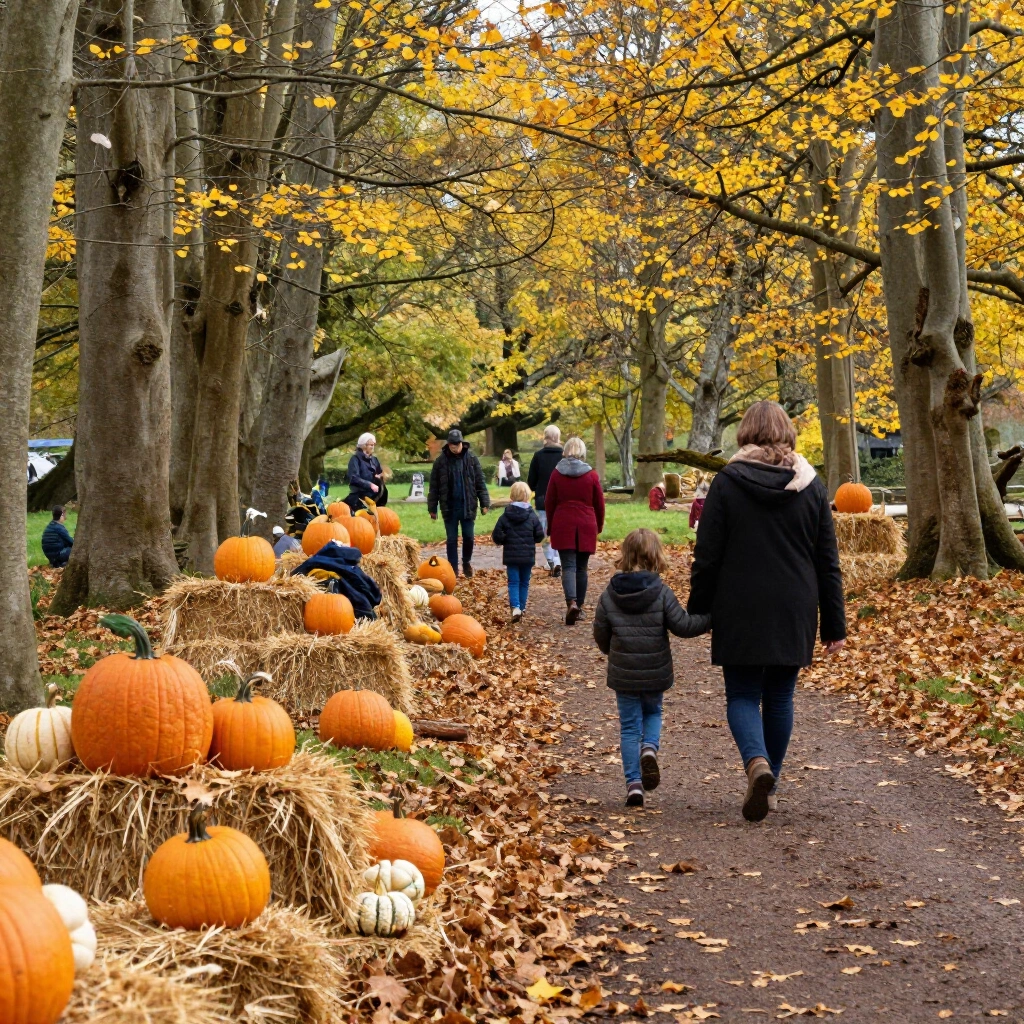
The pumpkin trail runs the last three weekends of October and sells out first for the 4pm slots, when the lanterns come on.
The same 40 acres behaves like four different parks
People who visit once in August and decide they know the place have seen roughly a quarter of what happens here. The rides stay put. Everything around them changes.
Opening runs from mid February to the end of December, with weekends and school holidays as the base pattern and daily opening through late July and August. January is closed for maintenance, which is when the ride bands get repainted and the drop tower goes through its annual test.
Pick the season to match the child, not the weather forecast.
February to April: lambing, mud and short queues
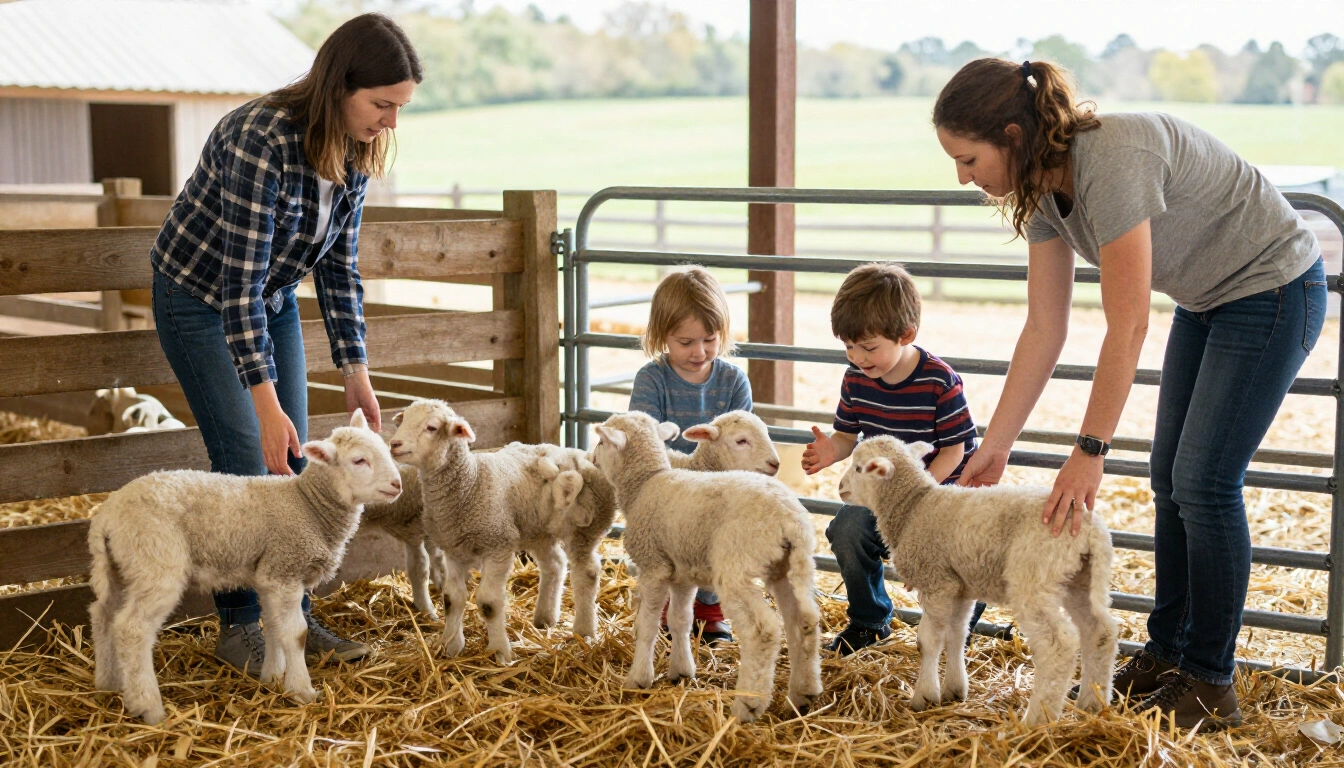
The quietest and cheapest stretch of the year. Day tickets drop to £14.50 midweek, the car park never fills, and the big rides run with waits under five minutes. Lambing starts in the last week of February and runs into early April, with three or four pens open in the animal barn and staff on hand at set times.
The trade off is ground conditions. The bottom field is genuinely wet until about mid April, and the water play stays closed until the May bank holiday. Come for the animals and the empty rides, not for a full day outdoors.
This is the right window for a first visit with a nervous child. Empty queues mean a ride can be watched twice before anyone commits, and nobody is standing behind you sighing.
May to August: the full site, and the crowds that come with it
Everything is open. Water play from the May bank holiday, the chip van from mid July, evening opening to 7pm on Fridays through August. This is the park at full strength and also the park at its busiest.
Weekday visits in term time during May and June are the sweet spot of the whole year. Full site, school groups gone by 2pm, and queues around ten minutes on the headline rides. Once the summer holidays start, weekday and weekend crowds converge and the difference between a Tuesday and a Saturday shrinks to almost nothing.
Bring swim kit any day the forecast passes 18 degrees. The splash pad runs on a timer from 10.30am to 4.30pm and the changing rooms sit right beside it, but the queue for a cubicle at 3pm is longer than the queue for any ride.
September and October: the strongest value in the calendar
Early September is close to empty once schools return, with warm ground, open water play on the hot days, and the lowest crowd levels of the second half of the year. Prices stay at summer rates until the middle of the month, then drop.
Half term brings the pumpkin trail, which is the only part of the year that needs a timed booking. Around 4,000 pumpkins go out along the woodland path, and the last three weekends of October carry a separate evening ticket. The daytime slots before 1pm are the ones that stay available longest.
One honest warning about October. The trail is aimed squarely at under tens. Teenagers who came for the rides will finish it in fifteen minutes and want to be somewhere else, so treat it as an add on rather than the reason to visit.
What changes with the weather, and what does not
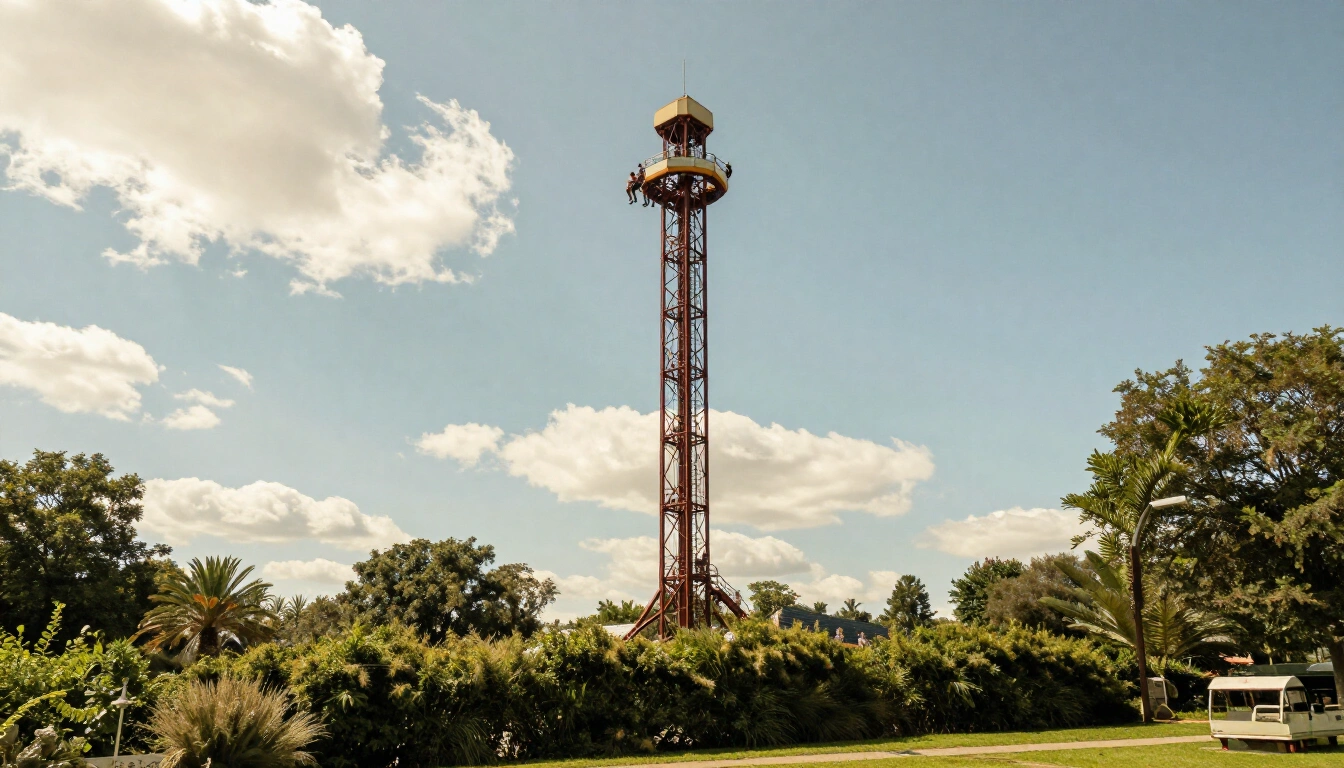
Rain closes the drop tower and the two water rides, because both run on open track and the restraints get slippery. Everything else keeps going, including the coasters, which surprises people. Wind is the bigger problem. Anything above about 40mph shuts the swings and the inverter, and a Devon gale in late October will take out the whole top band for a day.
The park posts closures on the entrance board each morning and refunds nothing for weather, which is standard across UK parks but still worth knowing before you drive an hour. If two headline rides are down, ask at the ticket office about a return voucher rather than a refund. They are given more often than the website suggests.
November and December: lanterns, and a much smaller park
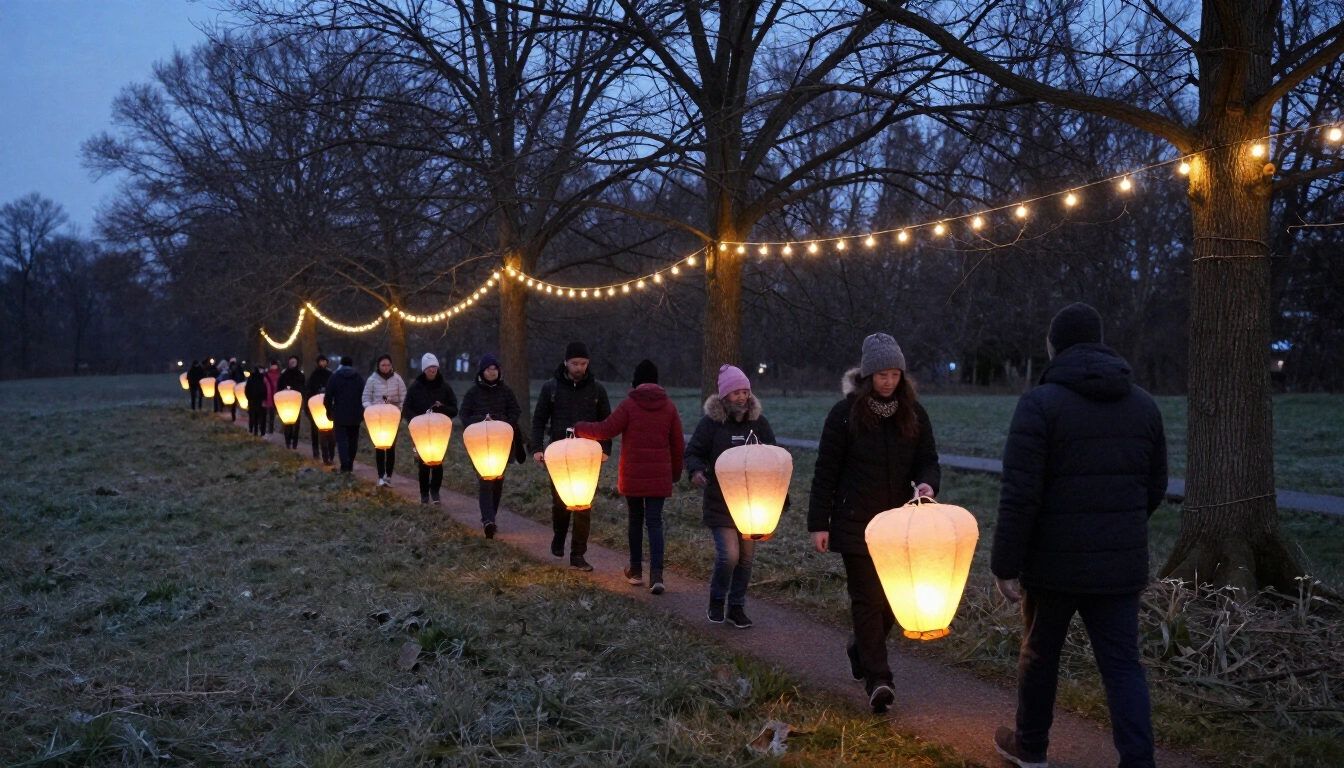
Most outdoor rides close for winter from the first weekend of November. What remains is the animal barn, the play barn, four gentle rides and the lantern trail, which runs Thursday to Sunday evenings through December.
Tickets for those evenings are priced separately and sell through in the week before Christmas. Families with children under six get the most out of it. Anyone hoping for a full ride day in December will be disappointed, and the site is clear about that on the booking page.
A year on 40 acres
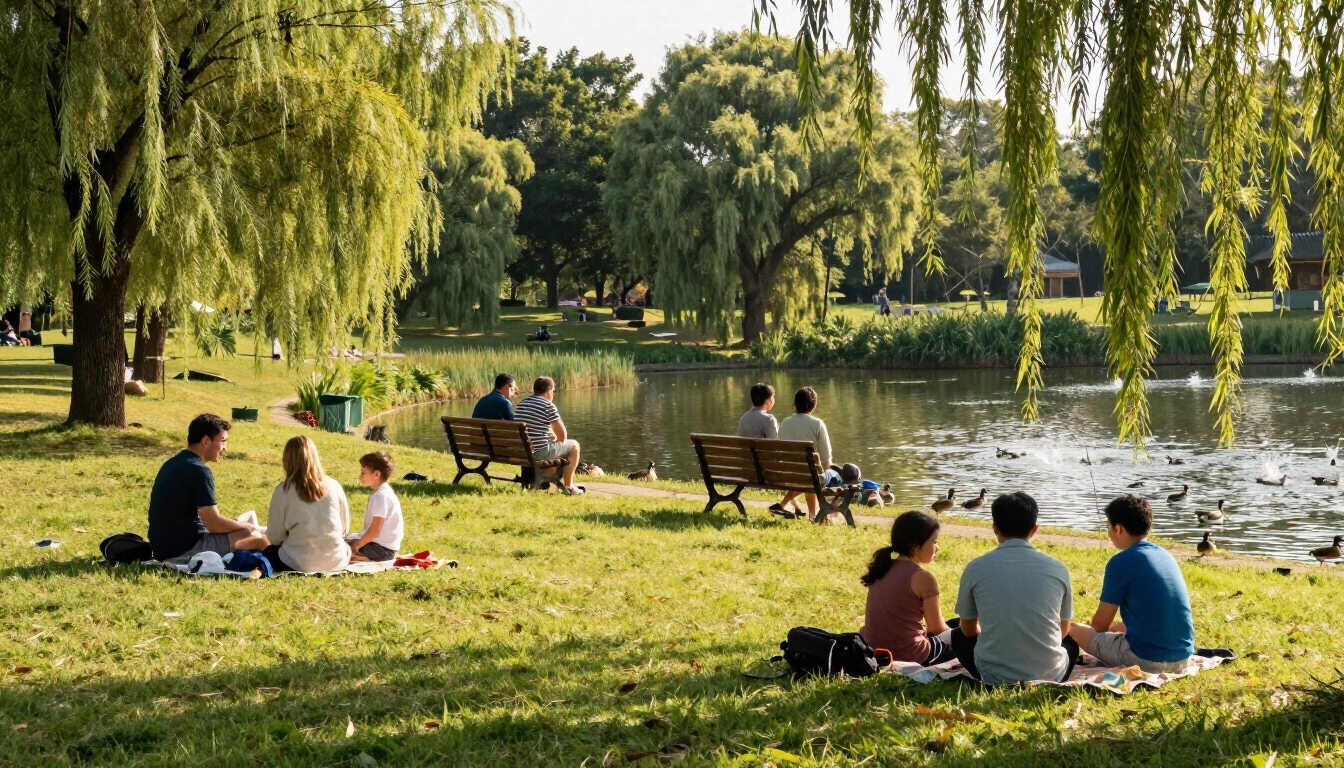
Five photographs, five different months. Lambing in the barn, the splash pad in July, the lantern trail in December, the drop tower on a clear afternoon, and the lake field where most families end up eating.

Three minutes of the park, filmed on an ordinary Tuesday
Promotional footage always shows the same four seconds of the biggest ride. This walk through covers the whole loop instead, in the order most families take it: farmyard first, then the middle terrace, the bottom field, and the play barn at the end.
Worth watching with a child who is unsure about the rides. Seeing the queue line, the restraints and how quickly each ride ends settles more nerves than any description does.
Toddlers, teenagers and everyone the brochures forget
A park this size cannot be equally good for a two year old and a fourteen year old, and pretending otherwise is how families end up with a bad day. Here is the straight version of who gets the most out of Clyst Valley Park.
Under fives get the best of it
This age group is the park’s strongest suit. Four rides carry no height minimum when an adult rides too, the farmyard runs three handling sessions a day, and the play barn has a fenced area for under fours with its own soft flooring and a clear view from the seating.
Practical details matter more than attractions at this age. Changing tables sit in four locations, not two. Buggies go everywhere except the top terrace steps, and there is a ramped path round the side. The farmyard cafe warms bottles and food without being asked, and there is a microwave by the picnic shelter.
The one weak spot is nap timing. There is no quiet indoor space to retreat to when the barn is loud, and on a wet August day the barn is very loud. Families who need a nap window are better off arriving at opening and leaving by 1pm.
Six to eleven is the target audience
Between about 110cm and 140cm, a child can reach most of the family band and the first of the big rides. That is the sweet spot the whole site is built around. Expect a full day, expect to be asked to repeat the Valley Runner four times, and expect the play barn to hold them for an hour at the end when the walking has caught up with them.
This is also the age where an annual pass starts to make sense, because the same child will happily come back six times a year without needing anything new to be added.
Twelve and over need managing
Be honest with teenagers before you book. Two rides go upside down, one drops, and the rest are aimed at younger siblings. A group of thirteen year olds visiting on their own will run out of park by early afternoon.
Where it works is a mixed family group, where the older ones ride the top band while the younger ones do the farmyard, then everyone meets at the lake for food. The site is small enough for two groups to split safely, and phone signal is fine everywhere except the bottom field.
Accessibility, plainly stated
The main loop is tarmac or compacted gravel and works for wheelchairs and mobility scooters, apart from the top terrace steps which have a signed ramp alternative. Blue badge parking sits in row A, about 60 metres from the gate.
A ride access scheme runs for visitors who cannot queue, using a return time system rather than an immediate front of line. Applications need supporting evidence and take a few days, so this is not something to arrange on the morning of a visit. Four rides can take a transfer from a wheelchair with staff help, and the details for each are posted at the entrance rather than only online.
For sensory needs, the quietest windows are the first hour after opening and after 3.30pm. Ear defenders are available free at the ticket office, and the animal barn stays calm all day. The play barn does not.
What a day actually costs a family of four
Two adults and two children booked online 24 hours ahead comes to £74. Parking is free, so the next real cost is food. A hot meal for four in the barn kitchen runs to about £34, or nothing at all if you bring a cool bag and use the picnic shelter. Add £12 for ice creams at the top gate on the way out, because it happens every time.
That puts a no extras day at £74 and a normal day at around £120. Compare that with the £99 annual pass and the case for the pass makes itself, provided you live close enough to use it.
Dogs, groups and everything else
Assistance dogs only inside the park. There are shaded tie points by the entrance, but leaving a dog there for six hours is not reasonable, so plan around it.
Groups of ten or more book through a separate form and get a reduced rate, and school parties change the feel of the site between 11am and 2pm on weekdays in June. If you want a quiet term time visit, aim for a Monday or a Friday.
What a day here costs, and when the pass wins
Ticket pricing at Clyst Valley Park moves with demand, which sounds worse than it is. There are three price bands and the band is shown before you pay, so nobody is guessing.
The gate price is fixed at £24 for everyone over 3 and never varies. Every saving comes from booking ahead, and the cutoff is 24 hours, not midnight the night before.
Book two days out, not two hours out. That single habit saves £5.50 a head.

Phone tickets scan straight through. Screenshots work too, which matters in the bottom half of the car park where signal is patchy.
The three price bands
| Band | When it applies | Online, 24hr ahead | On the gate |
|---|---|---|---|
| Quiet | Term time weekdays, February to April, November | £14.50 | £24.00 |
| Standard | Weekends outside summer, September, early October | £18.50 | £24.00 |
| Peak | Summer holidays, half terms, bank holidays, October evenings | £21.50 | £24.00 |
Children under 3 go free in every band and do not need a ticket. Carers accompanying a disabled visitor go free with the access application approved in advance. Over 65s pay the child rate, which is the same as the adult rate here because the park uses one price for everyone over 3.
The annual pass maths, done properly
The standard pass is £99 for twelve months from the date of first use, or £8.75 a month on a twelve month agreement. That is 4.6 quiet day tickets, 5.4 standard tickets, or 4.6 peak tickets.
Break even sits at three visits if you would otherwise be paying peak prices, and four to five visits at quiet rates. For a family of four that means the pass costs £396 and pays back after three summer visits, which most local families reach by the end of August.
The pass also carries 10 percent off food and 20 percent off the shop, plus two guest tickets at £12 each. Those guest tickets are the part people forget, and they are worth about £19 in peak season.
Here is the caveat. The pass excludes the October evening trail and the December lantern nights, both of which are ticketed separately at £16.50 and £14. A family that pictures a pass covering everything will be annoyed in October.
Who should not buy the pass
If you live more than about 50 minutes away, the maths changes. Fuel and the time cost of the drive mean most distant families visit twice a year regardless of what the ticket costs, and two visits never beats the pass.
If your youngest is over eleven, think twice as well. Interest drops off sharply once a child clears 140cm and has ridden everything, and a pass bought in April can sit unused by July.
Discounts that actually exist
- Groups of ten or more book through the group form and pay £13.50 a head in any band.
- School parties pay £9.50 with one free adult per six children, term time only.
- Blue Light and Defence Discount Service cards take 15 percent off online prices, applied at checkout.
- Second visit vouchers are handed out at the exit on days when two or more headline rides were closed.
Third party voucher sites list this park regularly. Check the band before you buy, because a peak day voucher at £19.99 is worse than the direct online price of £18.50 on a standard day, and the voucher terms usually exclude peak dates anyway.
Refunds, weather and moving a booking
Tickets are non refundable but they can be moved once, free, up to 24 hours before the visit. After that the ticket is spent. There is no weather guarantee, which is normal for UK parks, and the covered space is the reason they can hold that line.
If a ride you specifically travelled for is closed, ask at the ticket office before you leave rather than emailing afterwards. Return vouchers are issued on the day far more readily than they are issued later.
Twelve questions the ticket office gets every week
What are the opening times at Clyst Valley Park?
Gates open at 10am on standard days and 9.30am through the summer holidays, with last entry two hours before close. Closing runs at 5pm most of the season and 6pm in July and August. The park opens weekends and school holidays from mid February, daily through late July and August, then weekends again until the end of December. January is closed for ride maintenance.
How much are tickets and are they cheaper online?
Yes, and the gap is large. Online prices booked at least 24 hours ahead run from £14.50 on quiet days to £21.50 at peak. The gate price is £24 every day of the year. Under 3s are free in all bands. Booking two days ahead rather than on the morning is the single biggest saving available.
Is the park suitable for toddlers?
It is the strongest part of the site. Four rides have no height minimum when an adult rides too, the farmyard runs three handling sessions a day, and the play barn has a fenced under fours area with soft flooring. Changing tables sit in four locations and the cafe warms bottles without being asked.
What happens if it rains?
Most of the park keeps running. Rain closes the drop tower and the two water rides because both use open track, but the coasters, the farmyard and 2,400 square metres of covered play stay open. Wind is the bigger issue, since gusts above about 40mph shut the swings and the inverter. Closures go up on the entrance board each morning.
Can we bring our own food?
Yes. There are covered picnic benches beside the play barn, open tables by the lake, and a microwave in the picnic shelter. Bags are not searched for food. If you would rather buy, the farmyard cafe holds the shorter queue on wet days because most people head to the barn kitchen to dry off.
How long does a full visit take?
Five to six hours covers the site properly for a family with children between four and eleven. Under fives usually run out of energy after three or four hours, which is why the 9.45am arrival and a 1pm exit works well for that age. Teenagers who only want the top band rides will be finished inside three hours.
Is parking free and how far is the walk?
Parking is free, with roughly 900 spaces on hardstanding and an overflow grass field for peak days. Rows A to D sit about 60 metres from the top gate. Rows H onward add a nine minute walk, which matters at 4.30pm when somebody is being carried. Blue badge spaces are in row A.
What is the minimum height for the big rides?
The four headline rides need between 120cm and 140cm. The Valley Drop and Twin Tornado both need 120cm, Hedgerow Racer needs 125cm, and the two inverting rides need 140cm. The matcher on this page lists all fourteen height rules at once. Staff measure at the ride entrance and round down, never up.
Do you have to book a time slot?
Only for the October pumpkin trail and the December lantern nights, which run on timed entry and sell out. Normal day tickets are valid any time on the date shown, with no arrival slot. On peak August Saturdays the car park can reach capacity by about 11.30am, so an early arrival still matters.
Is the site accessible for wheelchairs?
The main loop is tarmac or compacted gravel and works for wheelchairs and mobility scooters, with a signed ramp avoiding the top terrace steps. Four rides accept a transfer from a wheelchair with staff help. A ride access scheme covering queues runs on a return time basis and needs supporting evidence submitted a few days in advance.
Is an annual pass worth it?
If you live within about 50 minutes, yes, usually by the third visit. The pass is £99 or £8.75 a month, which is between 4.6 and 5.4 day tickets depending on the band. It adds 10 percent off food and two guest tickets at £12. It does not cover the October evening trail or the December lantern nights.
Can we bring a dog?
Assistance dogs only inside the park. There are shaded tie points near the entrance, but they are not supervised and leaving a dog there for a five hour visit is not fair on the animal. Plan for someone to stay home with the dog or pick a different day out.
Pick a quiet Tuesday and book it two days out
Online tickets from £14.50, free parking, under 3s free, and 2,400 square metres of cover when Devon does what Devon does.
Written by staff who work the gate, the farmyard and the ride entrances, and checked against the ride boards and price bands in use this season. Height rules, opening patterns and prices change, so anything you read here should be confirmed on the booking page before you drive over.
Last updated 31 August 2026. Corrections go to the ticket office.